Most Bellevue sellers spend months preparing their home and about ten minutes thinking through their list price. That is backwards. No amount of staging, photography, or marketing can fix a home that hits the market at the wrong number.
Pricing is not just a number. It is your entire strategy. Get it right and you control the transaction. Get it wrong and you spend weeks watching buyers choose your neighbors instead, then negotiate from a position of weakness after a price reduction signals you were off from the start.
This is a deep dive into how pricing actually works in Bellevue's 2026 market, why sellers consistently get it wrong, and what the right approach looks like from the day you decide to sell. If you want a pricing conversation built on current data before you finish reading, Mark Popach at Popach & Co. will do that at no cost. His number is at the bottom of this page.
Why Pricing Is Different in Bellevue Than Almost Anywhere Else
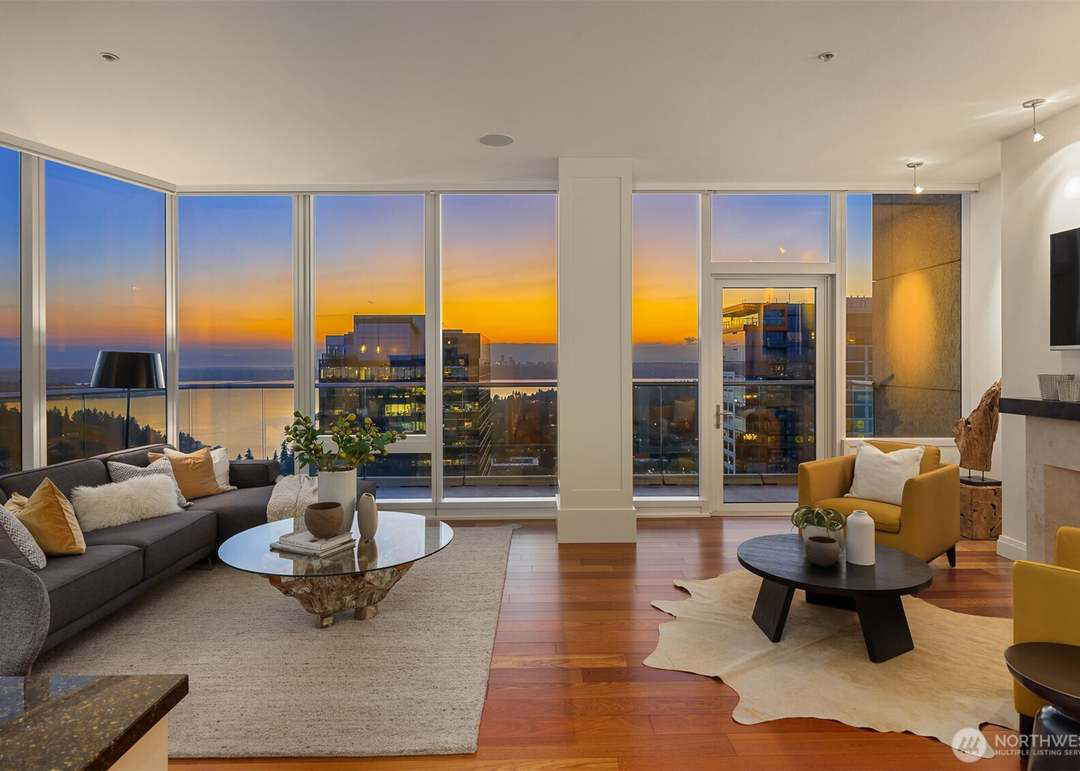
Bellevue is not a typical market. The price range alone, from $560,000 condos in Factoria to $10 million waterfront estates in Hunts Point, means that city-wide data tells you almost nothing useful about your specific situation.
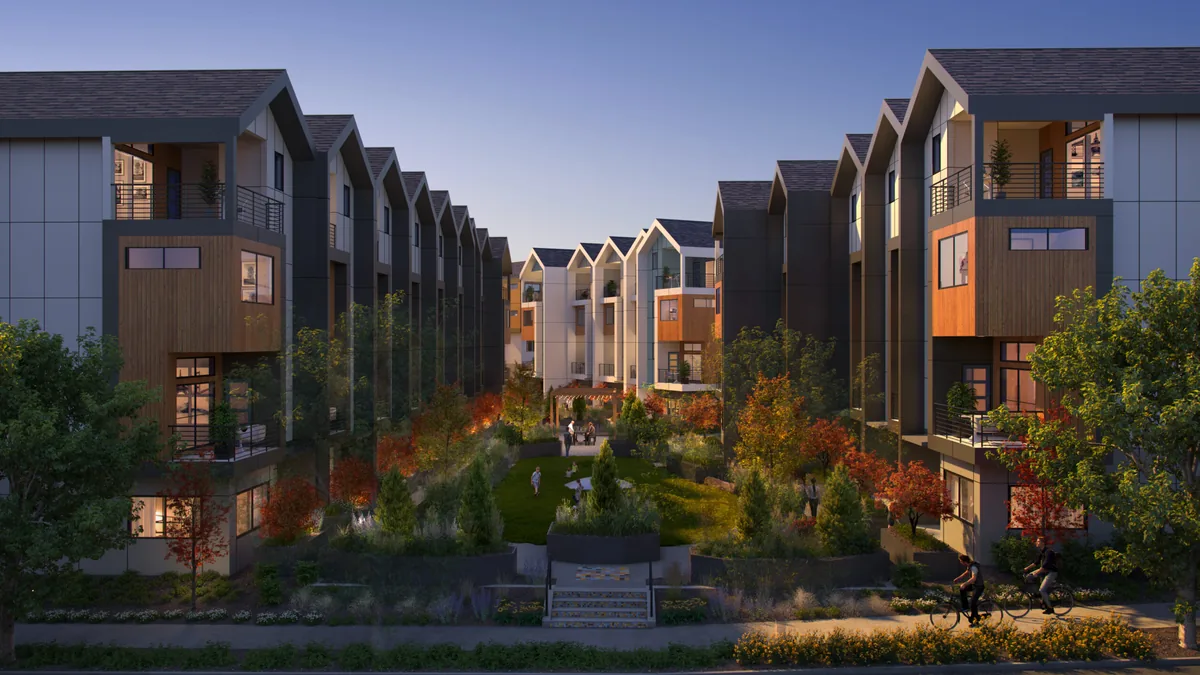
A West Bellevue estate operates under completely different supply and demand dynamics than a Newport Hills family home, which operates differently from a Spring District condo. Buyer profiles, days on market, offer volume, and price sensitivity all vary dramatically by neighborhood, price tier, and property type.
This is the first reason sellers get into trouble. They look at a city-wide median, read a headline about Bellevue being a seller's market, and assume that means they have pricing power no matter what number they choose. That assumption is expensive.
The Bellevue real estate experts at Popach & Co. have watched this play out repeatedly. A home in Somerset that would have sold in a week at $1.85 million sits for 45 days at $1.99 million and eventually closes at $1.81 million, which is less than the original right price, after weeks of carrying costs and negotiating from a weakened position.
Understanding how pricing actually works in your specific corner of Bellevue is step one.
The First 7 to 10 Days Are Everything
When your home goes live, there is a window that will never come back. Buyers and their agents are watching new inventory in real time. Serious buyers, the ones who are pre-approved, actively searching, and ready to move, set up automated alerts and respond to new listings within hours.
During that first week, your home gets exposure it will never see again. If the price is right, that attention converts to showings, and showings convert to competing offers. When you have two or three buyers emotionally invested in the same property at the same time, pricing power shifts entirely to you.
When the price is wrong, that window closes quietly. Buyers see the listing, register that it is above market, and move on. They do not watch it waiting for a reduction. They go under contract on something else. By the time you reduce, the serious buyers are gone.
In March 2026, well-priced Bellevue homes were selling in around 8 days on average. That number is not an accident. It reflects what happens when a home hits the market at a price buyers recognize as fair for what they are getting.
What "Testing the Market" Actually Costs You
"I just want to try the higher number and see what happens" is one of the most expensive decisions a Bellevue seller can make.
Here is what actually happens. You list at $2.1 million when comparable sales support $1.95 million. Buyers shopping in the $2 million range compare your home against others at that price point and find it wanting. Buyers who would love your home at $1.95 million never see it because it sits outside their search range. Showings are sparse. The first week passes. The second week passes.
By day 21, buyers and their agents have noticed. The listing has been sitting. In a market where well-priced homes move in a week, 21 days on market is a signal. Buyers start asking what is wrong with it. Some assume a hidden defect. Others simply wait, knowing the price is coming down.
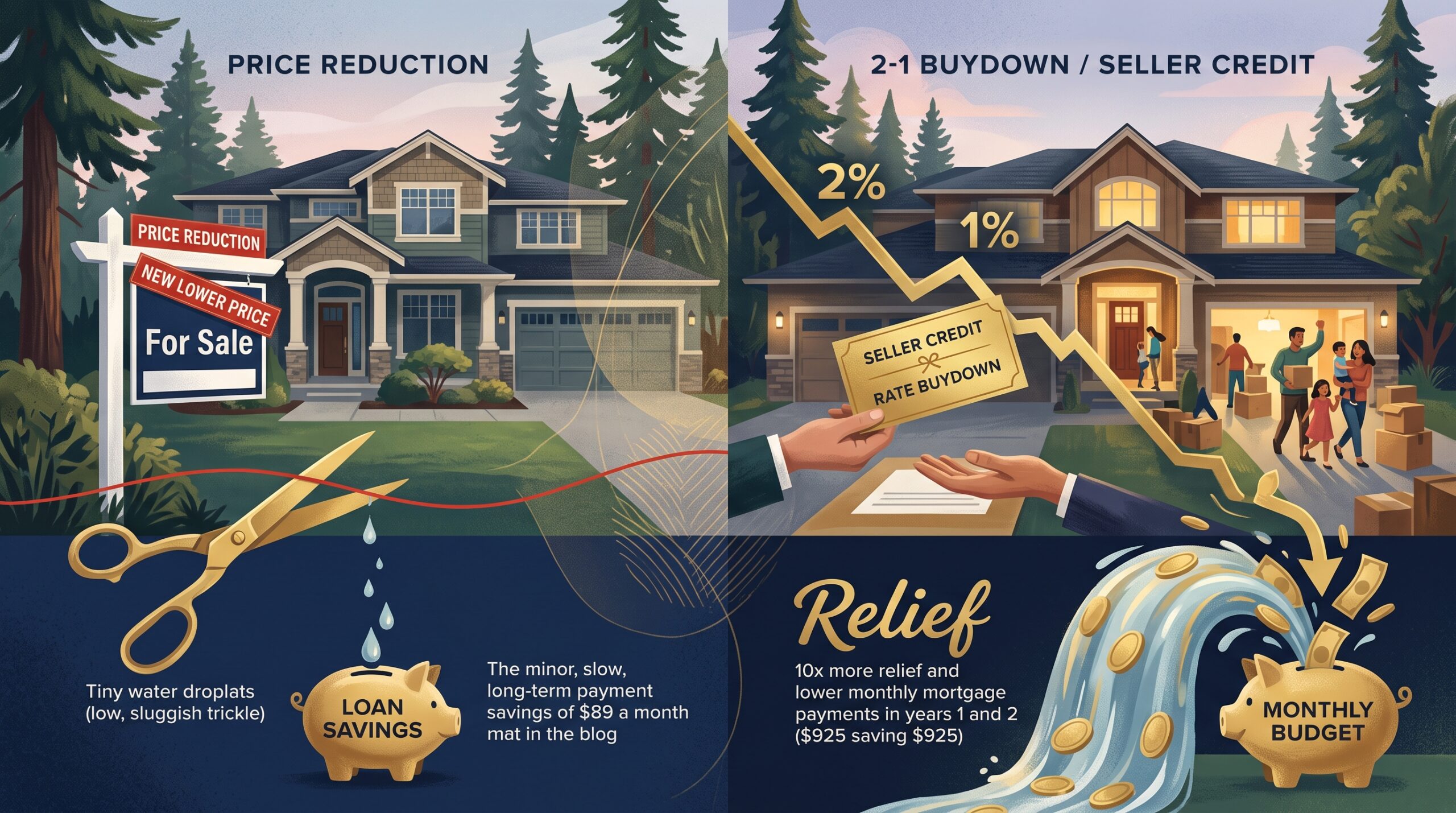
The reduction happens. You drop to $1.98 million. A few buyers come back, but now they negotiate harder because the price reduction confirmed their instinct that you are willing to move. You accept an offer at $1.91 million, less than you would have gotten by launching at $1.95 million and creating competition in that first week.
The math is consistent. Homes that require a price reduction almost always net less than they would have at a correct launch price, and they take significantly longer to sell.
The Hidden Costs of Sitting on Market
Days on market is not just a vanity metric. Every day your home sits unsold costs you real money.
Mortgage payments, property taxes, HOA dues, insurance, utilities, and maintenance continue whether your home is under contract or not. On a $1.5 million Bellevue home, carrying costs can run $8,000 to $12,000 per month depending on your loan balance and property tax situation. A 30-day delay caused by an overpriced launch is not a minor inconvenience. It is a five-figure mistake.
There is also the negotiating leverage you give away. Buyers track days on market closely. They know what is normal in Bellevue and they use extended time on market as a tool. Once a listing sits past 20 or 30 days without going under contract, buyers feel emboldened to make aggressive offers and request concessions they would never attempt against a freshly listed home with competing interest.
The home that looked like it was priced conservatively at launch ends up generating lower net proceeds than the one priced accurately from day one.
How a Professional Pricing Analysis Actually Works
A Comparative Market Analysis done by an agent who works Bellevue daily is not the same as an automated estimate from Zillow or any other platform. The difference matters significantly at Bellevue price levels.
Automated estimates use broad algorithmic inputs. They do not know that your kitchen was fully renovated 18 months ago, that your lot backs to a greenbelt, that your school feeds into Bellevue School District's highest-rated elementary, or that the comparable that sold three months ago had an outdated primary bathroom and 400 fewer square feet of usable space.
A professional CMA analyzes what has actually sold in your specific neighborhood in the last 60 to 90 days. Not what is currently listed. Listed prices are asking prices, not reality. Sold prices are what the market actually accepted. Your agent adjusts for condition, updates, lot characteristics, school boundaries, and what buyers are actively choosing between right now.
The goal is not to find the highest number you could theoretically get on a perfect day with a perfect buyer. It is to find the number that creates competition among multiple qualified buyers, drives urgency in that critical first week, and positions you to close at or above asking rather than below it.
Mark Popach does this analysis personally for every seller he works with, and he will do it for you at no cost before you make any decisions. One direct conversation with someone who prices and sells Bellevue homes every day is worth more than any algorithm.
Get Your Free Bellevue Pricing Analysis Mark Popach, founder of Popach & Co., works directly with every seller. No handoffs, no junior agents. He will pull the current sold data for your neighborhood, walk you through where your home actually lands, and give you a real number you can make decisions with. No cost. No obligation.
Call or text Mark directly: (425) 297-3088
Price Tier Matters: Bellevue Is Not One Market
One of the most important things to understand about pricing your Bellevue home is that the rules are not the same at every price point.
Under $1.5 million. This is the most active and competitive tier in Bellevue right now. Buyer activity is strong, homes are moving quickly, and well-priced properties in this range are still seeing multiple offers. A tight, accurate price drives competition and maximizes your outcome. The opportunity is significant if you launch correctly.
$1.5 million to $2.5 million. This is the heart of the Bellevue resale market. Buyers here are more discerning, do thorough comparative analysis, and will not overpay relative to recent neighborhood sales. Condition and presentation matter more here. A home priced to reflect its actual position against active competition moves cleanly. A home that is vague about its value sits while buyers wait for clarity.
$2.5 million to $4 million. The buyer pool narrows significantly at this tier, and buyers have more options and more patience. Pricing accuracy is critical because there are fewer buyers to absorb a mispriced listing. One or two wrong weeks can be the difference between a clean sale and an extended market time that sends the wrong signal.
Above $4 million. The luxury segment in Bellevue operates on its own timeline. Buyers at this level are rarely urgent. They are comparing against a short list of properties, often including new construction and private listings. Pricing strategy here involves understanding who your specific buyer is and what they are weighing your home against, not just what the last neighborhood sale closed for.
If you want to understand how the Bellevue housing market in 2026 affects pricing dynamics at each tier and by neighborhood, we have a detailed breakdown that goes well beyond city-wide averages.
The Emotional Trap Most Sellers Fall Into
Here is something the data is very clear about: sellers almost always overestimate what their renovations add to market value.
A $60,000 kitchen remodel you did two years ago does not add $60,000 to your list price. Most renovation projects return a percentage of their cost at resale, not the full investment. Buyers factor in condition, but they are also comparing your home against every other option available to them right now. If the market says your neighborhood supports $1.7 million for a home like yours, the kitchen upgrade might get you to $1.74 million. It does not get you to $1.9 million.
The other emotional trap is anchoring to what a neighbor sold for two years ago. The Bellevue market has shifted since then. Buyer behavior has changed. Inventory levels have changed. Interest rates have changed. What the market paid for a comparable home in 2023 or 2024 is historical data, not a pricing guide for today.
Pricing requires a financial mindset, not an emotional one. The sellers who consistently walk away with the best outcomes treat it that way from the start. The easiest way to get there is to sit down with someone who prices Bellevue homes based on data every single day, not someone who tells you what you want to hear to win your listing.
What Competitive Pricing Actually Looks Like in Practice
Pricing competitively in Bellevue does not mean pricing low. It means pricing accurately, positioning your home so that buyers in your tier see it as the right value for what it offers, relative to everything else available to them right now.
In practice, that means your agent pulls the last 60 to 90 days of sold data in your neighborhood, adjusts for the specific characteristics of your home, and identifies the price range where the data converges. Then you launch at the right point in that range based on your goals and timeline.
For selling a home in Bellevue in the current market, the target is typically a price that attracts two to three serious buyers in the first week. When that happens, you control the terms: the offer with the strongest financing, the cleanest contingencies, and the timeline that works best for you. You are not negotiating from a position of desperation after 40 days on market.
The other element of competitive pricing is understanding what your active competition looks like. Buyers compare your home directly against every other active listing in their price range. Your agent should walk you through that comparison before you set a price, not after.
You can browse active Bellevue listings yourself to see exactly what buyers are comparing your home against right now. It is one of the most grounding exercises a seller can do before setting a price.
Warning Signs Your Agent Is Pricing to Win the Listing, Not to Sell Your Home
There is a practice in real estate called "buying the listing." An agent suggests an inflated price to win your business, knowing you will need to reduce later. This is unfortunately common, and it costs sellers real money.
The warning signs: your agent suggests a price significantly higher than what the comparable sales support, does not show you the specific sold data behind their recommendation, or cannot explain the adjustments they made to arrive at the number.
A good pricing conversation is uncomfortable in the right ways. It involves showing you homes that are comparable to yours, being honest about where your home falls short relative to competition, and explaining why a correct number today is likely to produce more money at closing than an inflated number that sits and reduces.
If your agent tells you what you want to hear without showing you the data that backs it up, that is a red flag worth taking seriously. Mark Popach built Popach & Co. on the opposite approach: honest, data-driven pricing conversations that protect sellers from the mistakes that erode net proceeds.
Ready to Know What Your Bellevue Home Is Actually Worth?
Pricing is the one decision in the home selling process where you only get one chance to get it right. The launch sets the trajectory. Everything after it is managing the consequences of that first impression.
The right starting point is a pricing conversation grounded in current, neighborhood-level data, not city-wide medians, not automated estimates, and not what your neighbor got in a different market cycle.
Mark Popach has that conversation with Bellevue sellers every day. When you call Popach & Co., you are talking directly to the founder. He will pull the current sold data for your specific neighborhood, walk you through where your home actually sits in today's market, and give you a number you can make real decisions with. No cost. No obligation. No hand-off to someone else.
Talk to Mark Before You Price When you reach out to Popach & Co., you are talking directly to Mark Popach, the founder. Not an assistant. Not a team member. Mark works with every seller personally and provides a free pricing analysis built on current Bellevue sold data. One conversation gives you a real number, not a range designed to make you feel good.
Call or text Mark directly: (425) 297-3088
Free. No obligation. No sales pressure.