Issaquah draws buyers for reasons that are easy to list: Issaquah School District, mountain access, reasonable proximity to both Bellevue and Seattle, and price points that sit below Kirkland and Bellevue for comparable square footage. Those are real advantages and they hold up under scrutiny. What buyers often miss is that Issaquah is not one market. It is three distinct sub-markets operating under one city name, each with its own buyer profile, competitive environment, and long-term appreciation pattern.
A buyer who searches Issaquah broadly and does not understand the difference between Issaquah Highlands, Talus, and the valley neighborhoods will end up in the wrong place for their situation. That mistake is harder to undo than it sounds when you are starting from a home that does not fit how you actually live.
The Three Issaquahs: Which One Actually Fits Your Life
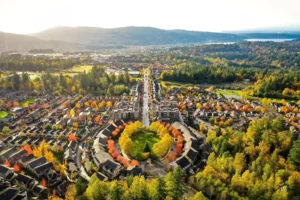
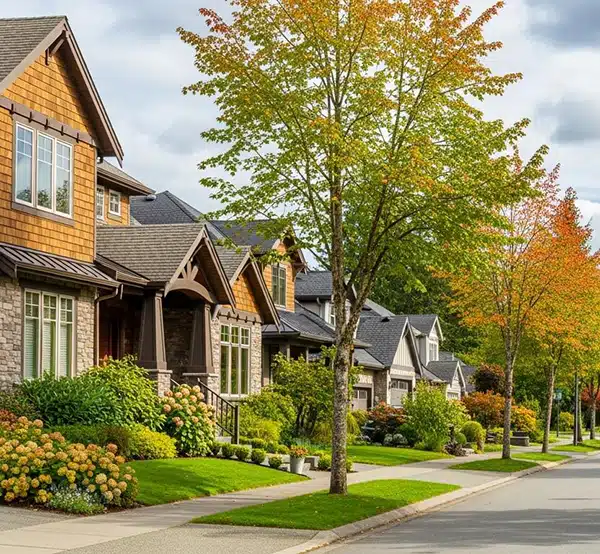
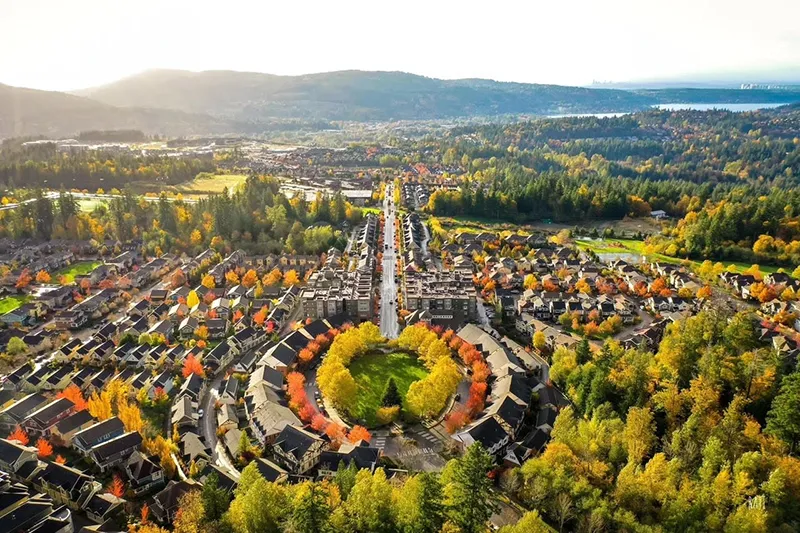
Issaquah Highlands sits on the plateau east of downtown Issaquah at roughly 1,000 feet of elevation. It is a master-planned community with miles of internal trails, a village center, parks, and a community identity that buyers either love or find too structured. Homes here were built from the late 1990s through the mid-2010s and range from condos and townhomes at the lower end to large single-family homes approaching $2 million at the upper end. The school access is excellent, the community infrastructure is well-maintained, and the views toward the Cascade foothills are genuinely spectacular on clear days.
The thing Issaquah Highlands buyers consistently underestimate before moving there is the drive to everything. The plateau sits above the I-90 corridor and while the distance to downtown Issaquah or to the onramp is not far in miles, the descent and the traffic on the Highlands connector road can add meaningful time to daily errands that look simple on a map. Buyers who work from home or whose daily routine does not require frequent off-plateau trips tend to be most satisfied. Buyers who are commuting daily and also need to run errands frequently find the plateau dynamic more wearing than they anticipated.
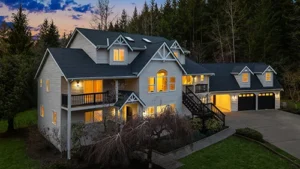
Talus sits adjacent to Issaquah Highlands on a separate parcel and offers a similar elevation and trail access with slightly different community character. Homes here tend to be newer and often larger than comparable Highlands properties at similar price points, with more architectural variation. The Talus community has its own trail network connecting to the broader Cougar Mountain Regional Wildland Park system, which is one of the most underrated outdoor assets in the region.
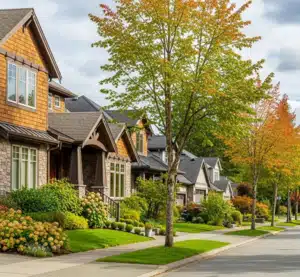
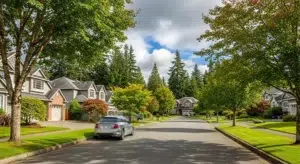
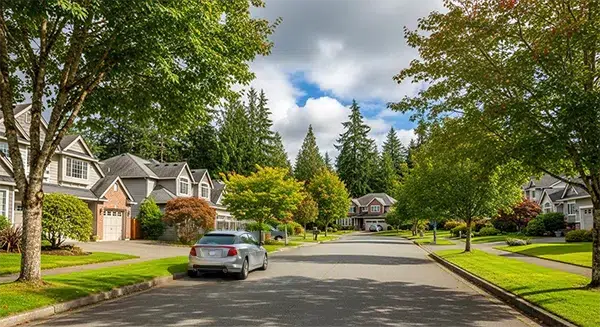
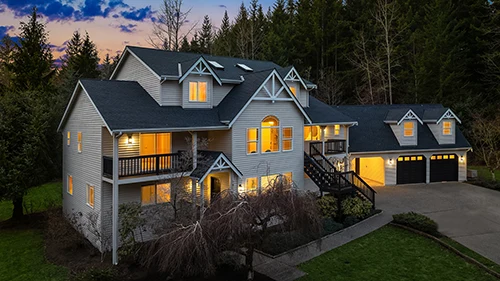
The valley neighborhoods, the older areas of downtown Issaquah, the Sammamish River corridor, and the established subdivisions along Issaquah-Hobart Road, offer a completely different experience. Homes here are typically older, lots are larger, and the neighborhood character is more established and less planned. The commute to I-90 is faster and more direct from the valley than from the plateau. Buyers who want Issaquah's school district access and natural setting without the plateau community dynamics often find the valley a better fit, and the price per square foot reflects the lower demand relative to the Highlands.
The Commute Reality: What Buyers Need to Test Before They Commit
Issaquah sits at the junction of I-90 and SR-900, which looks like a commuter advantage on a map. And in light traffic it is. The I-90 corridor gives buyers reasonable access to Bellevue in 15 to 25 minutes and to Seattle in 30 to 45 minutes depending on where you are going. What the map does not show is what the I-90 Mercer Island express lanes do to westbound commute times during peak hours, or what the Highlands connector road looks like at 8am when everyone on the plateau is leaving simultaneously.
Mark's standard advice to Issaquah buyers: drive every route you will actually use, at the time you will actually use it, on a weekday before you go under contract. The buyer who tests the commute on a Saturday afternoon is measuring something that does not exist Monday through Friday. The 22-minute drive to Bellevue that looked achievable becomes a 38-minute drive two days a week when the express lanes shift, and that is a material difference over years.
For buyers whose primary employer is in the Issaquah area itself, including Costco's headquarters which draws a significant buyer pool, the commute question largely resolves. The internal Issaquah commute is genuinely short and the city's trail access and downtown amenities are within reach without ever touching I-90.
Not Sure Which Part of Issaquah Fits Your Situation?
The Issaquah real estate agents at Popach & Co. work across all three Issaquah sub-markets and can give you a straight read on which neighborhoods match your commute, your school priorities, and how you actually live day to day. One conversation before you start touring saves months of searching in the wrong area.
Call or text Mark directly: (425) 297-3088
Issaquah School District: What the Premium Actually Buys
Issaquah School District is one of the strongest in Washington State and consistently ranks among the top districts in King County. The district serves Issaquah Highlands, Talus, the valley, and extends into parts of Sammamish and the Cougar Mountain corridor. For families with school-age children, the ISD premium is real, measurable, and has historically been durable across market cycles.
What buyers should understand is that the premium is not uniform across the district. Homes feeding into specific elementary schools within ISD carry different premiums depending on the reputation and demand for that school. Buyers who anchor their search to a specific school within the district, rather than the district as a whole, are making a more precise and ultimately more defensible investment. Asking which elementary school feeds your target address and whether that assignment is guaranteed or subject to boundary changes is a question worth asking before you make an offer, not after.
The Issaquah housing market in 2026 covers the current pricing dynamics in detail. The short version: ISD-anchored homes have held their value well relative to comparable properties in adjacent markets, and that pattern is likely to continue as long as the district's academic performance and community reputation remain intact.
Issaquah Highlands vs Valley: The Price-Per-Square-Foot Question
Buyers who approach Issaquah with a specific budget often discover that the plateau and the valley deliver very different purchases at the same price point. A $1.4 million budget in Issaquah Highlands buys a well-finished single-family home in a maintained community with trail access and mountain views. The same budget in the valley buys a larger home on a bigger lot with more outdoor space, more privacy, and a faster connection to I-90 but without the plateau community infrastructure.
Neither is the wrong choice. They suit different buyers. The Highlands buyer typically prioritizes the community feel, the trail network, and the newer construction. The valley buyer typically prioritizes space, privacy, and commute efficiency. Mark has worked with buyers who came in strongly preferring the Highlands and discovered after touring valley properties that the lot size and privacy mattered more to how they lived than the community amenities they imagined using. The reverse also happens.
Mark had a buyer in 2025 who came in convinced they wanted Issaquah Highlands for the community and the trails. After two tours of valley properties, they discovered that having a half-acre lot with a flat backyard and a detached garage was something they had wanted for years without ever articulating it. They bought in the valley, significantly under their original budget, and have been more satisfied with the purchase than they expected. The community amenities they thought they needed turned out to be amenities they liked the idea of. The space they had not thought to prioritize turned out to be the thing they used every single day.
Ready to Start Your Issaquah Home Search?
Browse Issaquah homes for sale to see current inventory across the Highlands, Talus, and the valley neighborhoods. Then call Mark to walk through what you are seeing and which properties are worth a closer look.
Call or text Mark directly: (425) 297-3088
What Buyers Consistently Get Wrong About Issaquah
The most consistent mistake buyers make in Issaquah is treating it as a single market and pricing expectations accordingly. A buyer who sees a valley home at $1.1 million and a Highlands home at $1.4 million and concludes the valley home is underpriced is missing the structural reasons those prices are where they are. The gap reflects community infrastructure, elevation, trail access, and the Highlands-specific buyer premium. It is not an arbitrage opportunity.
The second consistent mistake is underestimating the plateau elevation effect on daily life. Issaquah gets significantly more snow accumulation at elevation than the valley floor during winter storms. Buyers who move to the Highlands from Seattle or Bellevue often encounter their first real winter snow event and discover that the plateau roads and their driveway behave differently than anything they have managed before. This is not a dealbreaker for most buyers but it is a real planning consideration for anyone who works during winter weather events or who has specific mobility requirements.
The third is not testing the I-90 commute properly before committing. This has been covered but it bears repeating because the Issaquah on-ramp experience during peak hours is genuinely different from the experience at any other time. If you are going to live there for years, five minutes of research is worth less than one commute test drive on a Tuesday morning.
For buyers who are still deciding between Issaquah and Sammamish, the Issaquah vs Sammamish post covers that specific decision in detail and is worth reading before you anchor to either city.
Offer Strategy in Issaquah's Current Market
Issaquah's inventory is up significantly year-over-year and buyers have more options than they have had in years. That does not mean all neighborhoods are equally buyer-favorable. Well-priced Highlands homes in the $1.2 million to $1.6 million range still attract competitive interest from families who have ISD access as a non-negotiable. Valley properties in the $900K to $1.2 million range offer the most negotiating room in the current market, particularly on homes that have been active for more than 30 days.
Use the inspection contingency on every Issaquah purchase. Pre-2000 construction in the valley in particular carries the same deferred maintenance risks present in any Eastside market of that vintage. The HOA situation in older Highlands communities deserves specific attention. Some of the Highlands associations built in the late 1990s and early 2000s were set up by developers who underestimated long-term infrastructure maintenance costs. The roads, retaining walls, trails, and common areas on the plateau are more expensive to maintain than comparable suburban infrastructure, and some boards have been working with underfunded reserves for years as a result. Before you go under contract on any Highlands home in a governed community, request the last two years of HOA meeting minutes, the current reserve study, and the reserve fund balance. A board that is consistently approving special assessments or deferring major repairs is a cost center that does not appear in the purchase price but will appear in your ownership cost every year.
Start Your Issaquah Search the Right Way
Whether you are focused on the Highlands, Talus, or the valley, Popach & Co. works with every Issaquah buyer personally. Mark handles every showing and every offer himself and knows which neighborhoods are competitive right now and which ones have room to negotiate. The first conversation is free.
Call or text Mark directly: (425) 297-3088
Free. No obligation. No sales pressure.