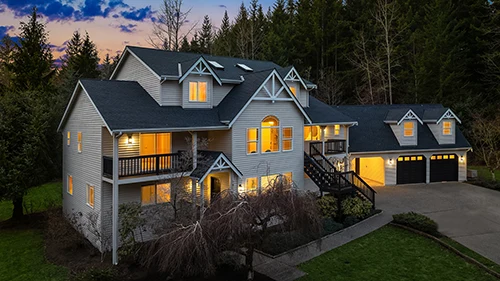
When most people think of Redmond, Microsoft comes to mind first. That association is accurate and it is also incomplete. Redmond is now one of the most consistently in-demand residential markets on the Eastside, drawing buyers at every level of the market: first-time buyers, growing families, move-up buyers, and tech professionals relocating from the Bay Area and beyond. What draws them all is the same combination: strong schools, genuine outdoor access, a commute advantage that compounds over years, and a residential character that most Eastside cities stopped delivering once density increased.
Mark Popach, featured in the Wall Street Journal for his expertise in the Washington State real estate market, has worked with buyers navigating the Redmond decision across hundreds of Eastside transactions. The pattern he sees consistently is that buyers who research Redmond carefully end up more satisfied with the purchase than almost any other Eastside city. The ones who skip the research and buy based on the Microsoft proximity alone sometimes discover the city delivered more than they expected, and sometimes discover they would have been better served by Kirkland or Bellevue depending on their priorities.
Where the Redmond Market Actually Stands in 2026
Redmond's median sale price sits around $1.26 million as of spring 2026, down approximately 3% year-over-year from the 2025 peak. Inventory is up 67% year-over-year with roughly 356 homes for sale, and months of supply sits at 2.6, still a seller's market by conventional measures but meaningfully more balanced than 2023 and 2024. Homes are averaging 11 days on market for well-priced listings, and 27% of active listings have had price reductions, which signals that sellers who launched aggressively are correcting back to market.
The Zillow average home value tells a different story at $1.24 million, down 10.6% year-over-year, reflecting the correction in higher-end ZIP codes like 98052 where the 2024 peak was sharpest. The practical read: Redmond in 2026 offers buyers more options and more negotiating room than at any point since 2019, particularly on homes that have been sitting more than 20 days. Well-priced homes in the core neighborhoods are still moving in under two weeks.
Browse Redmond homes for sale to see current inventory across all neighborhoods and price points. The gap between what was listed in 2024 and what is available now is more visible in the active listings than in any market report.
A City Built Around Employer Stability
Redmond's real estate market benefits from something few cities can match: employer density that does not depend on a single company. Microsoft's main campus is the anchor, but Meta, Nintendo of America, and a growing cluster of tech-adjacent companies have built a diversified employment base that supports housing demand across market cycles. When one employer slows hiring, the others tend to absorb the slack.
More than 70% of Redmond residents own their homes rather than renting, which keeps turnover low and inventory naturally constrained. That ownership profile reflects the buyer demographic: people who moved to Redmond for the schools, the trails, and the employer access, and who tend to stay. Redmond is not a transient market the way some tech-corridor cities become. That stability is measurable in price floor resilience during corrections.
For buyers relocating from California or other high-cost markets, the no-state-income-tax advantage applies here as directly as it does in Seattle. At $250K in household income, Washington's zero income tax translates to roughly $23,000 per year in additional take-home pay compared to California rates. At current mortgage rates, that savings represents significant purchasing power that does not show up in the sticker price comparison.
Thinking About Buying in Redmond?
Mark Popach works with buyers across Redmond's neighborhoods and knows the market at the street level. Whether you are comparing Redmond to Kirkland, Bellevue, or Issaquah, one conversation gives you a clear picture of what each city delivers at your price point. For a deeper look at the buyer decision framework specific to Redmond, the buying a home in Redmond guide covers the neighborhood and commute questions in detail.
Call or text Mark directly: (425) 297-3088
Neighborhoods: Which Part of Redmond Fits Your Situation
Redmond is not one neighborhood any more than Kirkland or Bellevue is. The experience of living in Education Hill is genuinely different from living in Overlake, which is different again from Redmond Ridge. Understanding the distinctions before you start touring saves significant time and avoids the expensive mistake of buying into a neighborhood that looks right on a map but does not fit how you actually live.
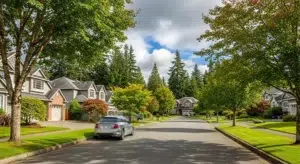
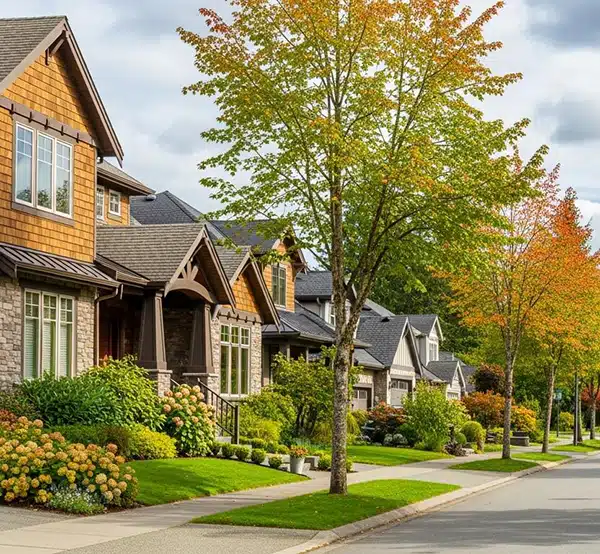
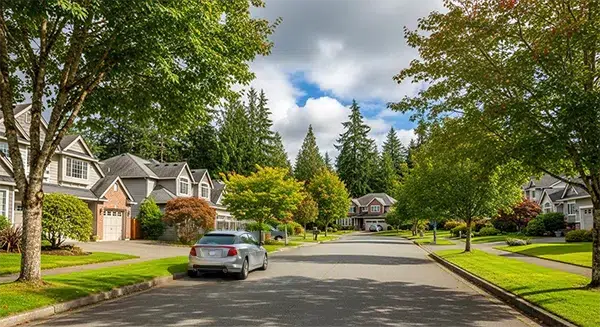
Education Hill is Redmond's most established residential area. Tree-lined streets, older homes with larger lots, and a strong community identity make it consistently popular with families who want a neighborhood feel rather than a planned community feel. The school feeders here are excellent within Lake Washington School District. The commute to Microsoft is 10 to 15 minutes without freeway involvement for most addresses, which is one of the most underrated advantages in the city.
Overlake sits closest to the Spring District and Microsoft's main campus and has become the first choice for buyers who prioritize commute efficiency above everything else. The neighborhood is denser than Education Hill with a mix of condos, townhomes, and single-family homes. The light rail extension serving the area has added transit access that makes Overlake genuinely useful for buyers who want the option of not driving to work.
Idylwood and the neighborhoods along Lake Sammamish offer waterfront and near-waterfront living at price points that sit below comparable Lake Washington properties in Kirkland. Access to Lake Sammamish State Park is the anchor amenity, and the buyer pool here skews toward families and outdoor-focused buyers who want water access without the full Kirkland waterfront premium.
Redmond Ridge sits east of the core city on a plateau similar to Issaquah Highlands, with newer construction, community trail networks, and Trilogy at Redmond Ridge for buyers 55 and older. The trade-off is a longer commute to the main Microsoft campus and less access to downtown Redmond amenities. For buyers who prioritize condition and community infrastructure over commute efficiency, Redmond Ridge delivers well at its price points.
Schools: Lake Washington School District
Redmond is served entirely by Lake Washington School District, one of the top-performing districts in Washington State. LWSD's consistency and reputation attract a large and financially capable buyer pool to Redmond, which supports price floors in BSD-adjacent ways even though the premium is not quite as steep as Bellevue School District's.
For buyers comparing Redmond to Bellevue on the school dimension, the distinction is less about educational outcomes and more about the market premium each district commands. Both are genuinely excellent. Bellevue's BSD premium is steeper and more durable at resale. Redmond's LWSD premium is real and consistent but allows buyers to access strong school quality at price points that sit below comparable Bellevue addresses. For families whose primary concern is the school experience rather than the resale signal, Redmond offers exceptional value.
Buyers with school-age children should verify the specific elementary and middle school boundary for any Redmond address before making an offer. LWSD is a large district and quality is consistent across most schools, but boundary verification before going under contract is standard practice for any buyer whose school assignment is part of the purchase rationale.
Lifestyle: Trails, Parks, and a City That Does Not Feel Like a Suburb
What surprises buyers who visit Redmond for the first time is how much outdoor access is woven into the residential fabric of the city rather than reserved for weekend excursions. Marymoor Park's 640 acres sit at the southern end of the city with sports fields, an off-leash dog area, a climbing wall, and the Burke-Gilman Trail connection that runs north through Kirkland and Bothell. The Sammamish River Trail connects to Marymoor and adds miles of dedicated cycling and walking path that residents use daily rather than just on weekends.
Redmond Town Center gives the city a walkable commercial core that most Eastside cities its size do not have. Independent restaurants, farmers markets, and community events give it a genuine neighborhood character that most Eastside cities its size do not have. For buyers who want the suburban lot size and school quality of the Eastside without giving up entirely on walkable daily life, Redmond hits a balance that is genuinely uncommon.
The light rail expansion connecting Redmond to Bellevue and Seattle through the Overlake and Downtown Redmond stations has changed the commute calculus for buyers working anywhere on the light rail corridor. Buyers who were previously limited to driving now have a transit option that is particularly useful for daily Seattle commuters. The long-term property value implications of transit corridor access are well documented across comparable markets.
The 2026 Market: What It Means for Buyers and Sellers
For buyers, the 67% inventory increase and 3% price correction create conditions that have not existed in Redmond since before the pandemic. Homes that were untouchable at 2024 prices and pace are now available with contingencies, with negotiating room on inspection findings, and in some cases with meaningful price reductions from original list. The buyers who are positioned to act in this environment, with financing secured and a clear sense of which neighborhoods fit their situation, are finding better opportunities than at any point in recent memory.
For sellers, the 2026 market rewards accurate pricing and strong presentation more than it has in years. The 27% price reduction rate among active listings tells the story clearly: sellers who launched at 2024 prices are sitting and reducing. Sellers who priced accurately for current conditions are still closing in under two weeks at or near list. The gap between the two outcomes is almost entirely explained by the initial list price decision.
Working with a Redmond real estate agent who tracks neighborhood-level sold data and active competition daily is worth more in a market with this much internal variation than it was when rising prices covered most pricing mistakes. For sellers specifically, a free pricing analysis built on current Redmond sold data in your specific neighborhood is the right starting point before any other decision. For information on what selling a home on the Eastside requires in the current market, Mark provides that analysis directly.
Ready to Buy or Sell in Redmond?
Whether you are buying your first Redmond home, moving up within the market, or selling and evaluating your options, Popach & Co. works with every client personally. Mark handles every showing, every offer, and every negotiation himself. The first conversation is free.
Call or text Mark directly: (425) 297-3088
Free. No obligation. No sales pressure.